


Quick answer: prepare a few phrases to ask for repetition, say what you did not understand and check the answer. There is no need to pretend you followed the whole conversation. The British Council resource "Checking understanding" suggests practising these situations with expressions such as "Could you say that again, please?".
At a glance
- Who it is for: students preparing for an English course abroad.
- What to practise: asking for repetition, a slower pace and confirmation.
- How to start: pick two phrases and rehearse them in pairs.
- Supporting resource: an A1-level British Council video, with transcript and exercises.
Asking for repetition without going blank
Before you travel, you can rehearse two phrases: "Could you say that again, please?" to ask someone to repeat, and "Can you repeat that more slowly, please?" to ask for a slower pace. Practise them with your teacher or a classmate, swapping roles.
It is not about memorising a long list. Choose expressions you understand and can use when you need them. If the problem is that you cannot hear well, the same resource includes "I can't hear you very well".
Which phrase can you use in each situation?
| Situation | Phrase to use |
|---|---|
| You did not catch what was said. | Could you say that again, please? |
| You need a slower pace. | Can you repeat that more slowly, please? |
| You cannot hear well. | I can't hear you very well. |
| You do not understand. | I don't understand. |
Checking a specific piece of information
The British Council dialogue shows how to confirm whether you have identified an object correctly: "Do you mean the hammer?" and "Is this it?". During your stay, you can practise the same idea with a classroom instruction or directions inside the school: identify the doubt, ask and listen for the confirmation. Do not answer yes just to end the conversation.
A simple activity before you leave: in pairs, one person gives an instruction and the other asks for clarification. Then check whether you both understood the same thing. This exercise is a practice suggestion, not a level test or an official British Council activity.
When should you ask for more help?
If an instruction affects safety, health or getting somewhere, do not carry on with the doubt. Ask for help from the teacher, the group leader or the person in charge of the programme. Using a phrase you have learned does not replace checking that you have really understood what you have to do.
Frequently asked questions
Which phrase should I prepare first? "Could you say that again, please?" is a polite way to ask for repetition. Choose it if you understand it and can say it comfortably.
Is the resource for beginners? Yes. The British Council places it at Speaking A1. You will find a video, the transcript, phrases to repeat and exercises to practise.
Is saying "I don't understand" enough? It can be a first step. If you can, add what you need: that they repeat it, speak more slowly or confirm a specific piece of information.
Are you considering a language stay?
Tell us the student's age, starting point and goals. At Valua Languages we will study a suitable proposal together. Preparing how to ask for help can also be part of getting ready for the trip. Write to us or send an email to hola@valuatravel.com.
Source, consulted on 16 November 2026: British Council, "Checking understanding": learnenglish.britishcouncil.org.
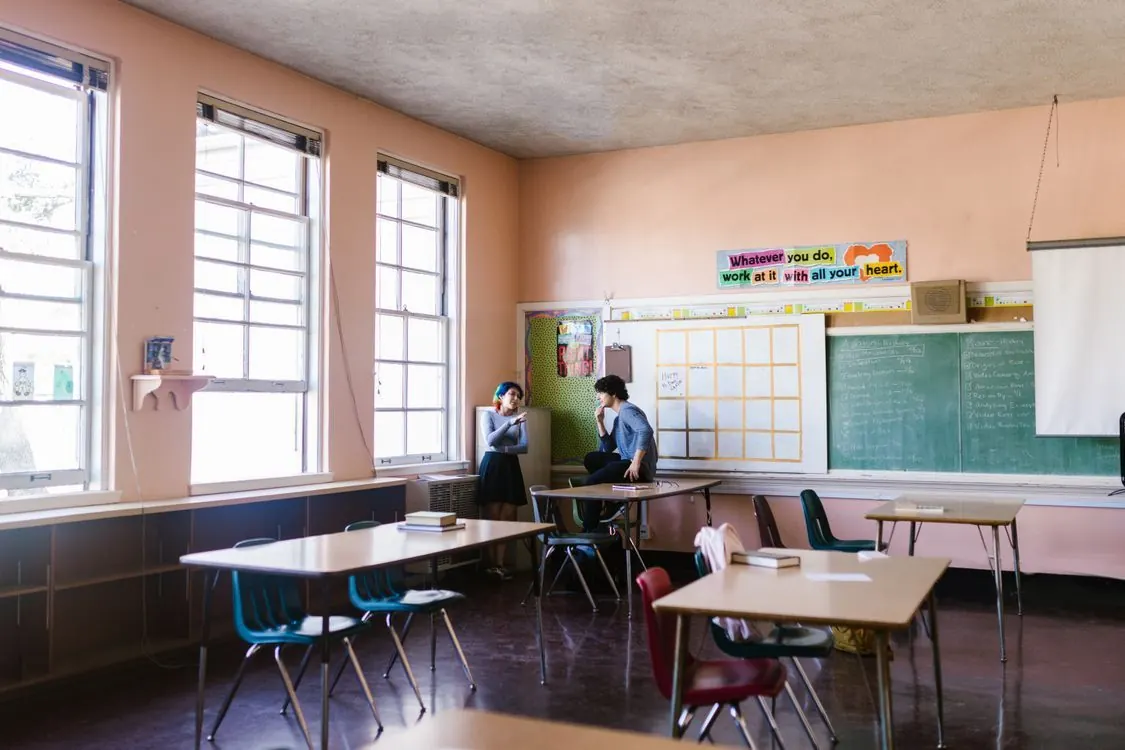
Header photo: practice between students. Photo: Monstera Production · Pexels (illustrative image; does not show Valua Languages students or programmes, or British Council activities). Pexels licence.