

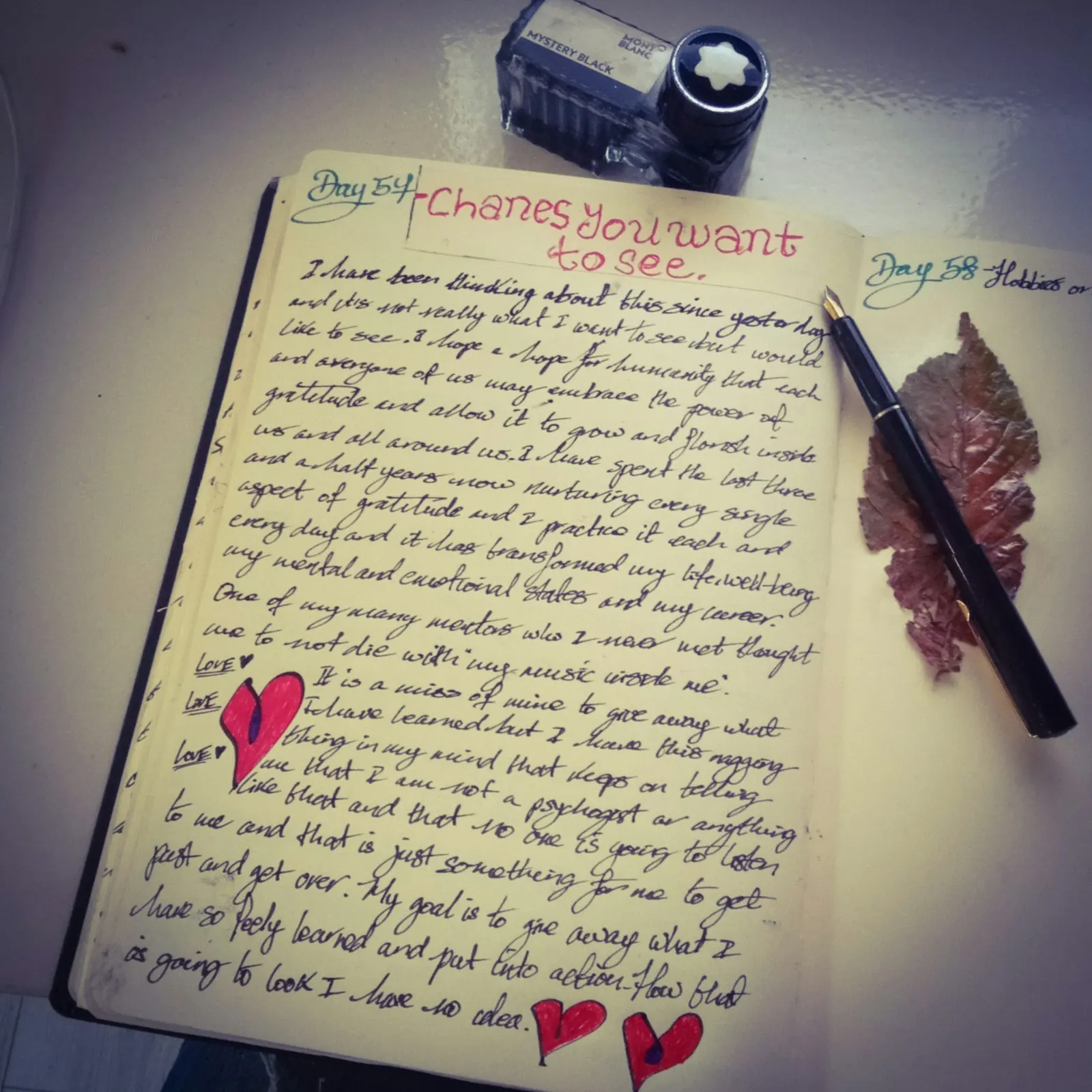
Quick answer: we suggest a short log with three sections: what you practised, what was hard and what you want to try next. During a language course abroad, the diary helps you organise your experiences, spot what keeps repeating and prepare questions for your teacher. It is not an exam, nor proof that the stay has produced a particular level.
At a glance
- What it is: a learning log, a weekly record of learning work in areas such as grammar, vocabulary, pronunciation and self-study.
- Who it is for: students on language courses and stays abroad, with the support of their teachers.
- How it works: a table with the days of the week and the areas worked on, with a short review each week.
- What you gain: more autonomy and motivation. According to the research cited by the British Council, students who set their own goals tend to achieve more than when they work only towards goals set from outside.
What is a learning log?
In an article for the British Council, Aoife McLoughlin presents the learning log as a tool for tracking weekly work in areas such as grammar, vocabulary and pronunciation. The idea is to draw a simple table: the days of the week across the top, and the areas you work on down the side. Each day you note what you did, which lets you review where you spent your time and decide what to work on next. We can adapt this idea to a language stay without turning it into one more load of homework.
What can you write?
We suggest choosing one specific situation from the day: a conversation in class, a question during an activity or an expression you heard. Note what you wanted to say, what you understood and what question you are left with. If you do not know how to say something, mark it to look up later; there is no need to make up an answer.
For example: "I understood the question, but I couldn't explain why I liked the activity." The next step could be to prepare two sentences with your teacher and look for a chance to use them. It is a practice suggestion, not a formula that guarantees fluency.

How can you review it without overdoing it?
Pick a moment each week to reread your notes. Which difficulties keep coming back? Have you practised only reading, or conversation too? Choose one small priority for the following days, instead of expecting every skill to move forward at once.
The same British Council article proposes a complementary tool, the GROW model, to set a specific goal: define the goal, the current reality, the obstacles, the options and the next step. If the diary shows you that conversation is what you find hardest, that could be your goal for the week.
The log does not need the names of classmates, details about the host family or photos of other people. Keep it focused on your own learning and decide with your teacher which parts are worth sharing.
Frequently asked questions
How much time should I spend on the diary? A few minutes a day to write and a short review once a week. If it is hard to keep up, cut down the sections: the diary should help, not get in the way.
Do I have to show it to the teacher? No. It is a personal record; decide with your teacher which parts are worth discussing in class.
Does it work for any language and level? Yes. The format adapts to the language of the stay and the student's level: start with simple notes and make them more complex as learning progresses.
Are you considering a language course abroad?
Tell Valua Languages the student's starting point and goals, and we will design a suitable proposal together, with realistic expectations. Write to us or send an email to hola@valuatravel.com.
Source, consulted on 16 November 2026: British Council, Aoife McLoughlin, "Two tools to help you set learning goals", 18 May 2017: britishcouncil.org.
Header photo: handwritten notebook with an inkwell and a fountain pen. Photo: Mark Casey · Unsplash (illustrative image, does not show Valua students or facilities).