


Quick answer: choose a short clip that interests you, listen once to get the general topic and go back to it afterwards to check one specific detail. You can use subtitles on a second listen. The aim of the practice is not to understand every word the first time, but to learn to tell which information you are looking for.
Start with the general meaning
In a British Council article, the English teacher Raphael Ahmed distinguishes between listening for the gist and listening for details. For the first exercise he suggests a short video with subtitles: look at the title to anticipate the content, listen for the words that help identify the topic and then repeat with the subtitles to check what you had understood.
Before your trip, you can adapt it like this: pick a clip about an activity you enjoy and sum up its topic in one sentence. If you got lost, shorten the clip or look for more accessible material. You do not need to start with a whole film: two or three minutes is enough.
A second listen with a mission
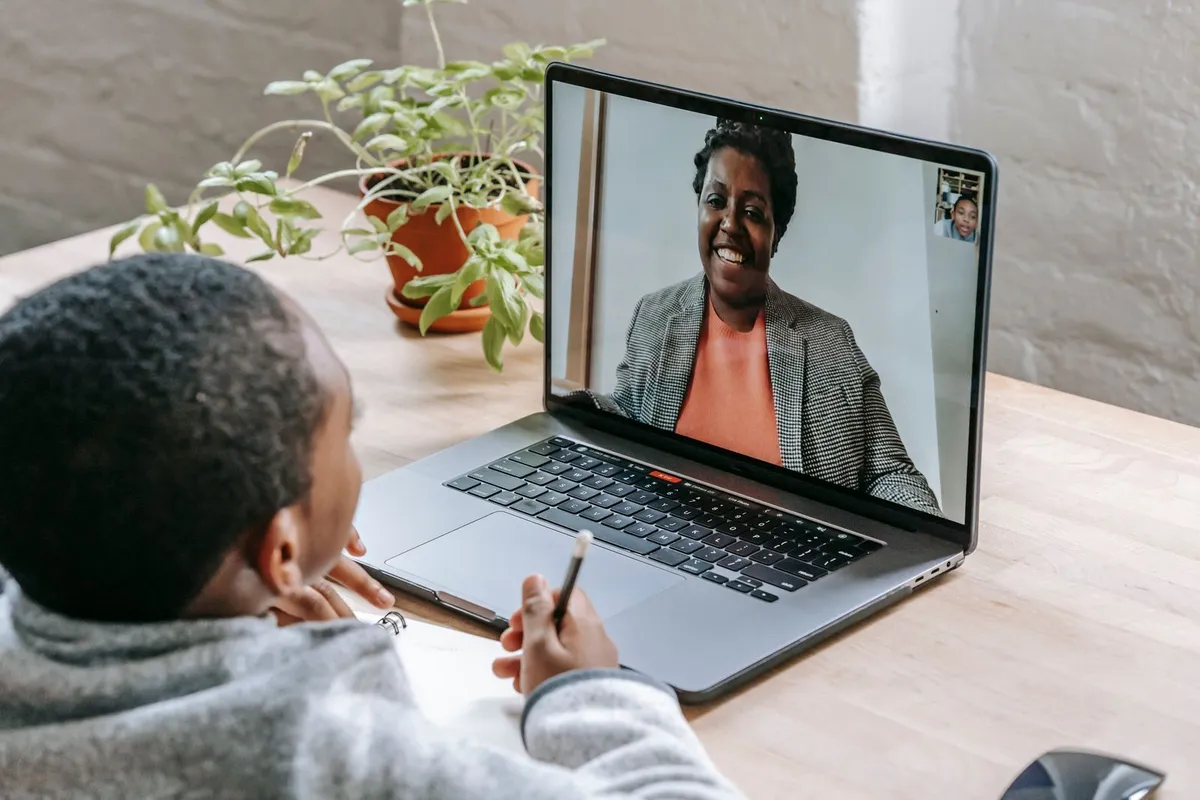
Now choose one detail: a time, a place, an opinion or an instruction. Listen to the clip again to find just that information, instead of trying to transcribe the whole conversation. Then check your answer with the subtitles or a transcript, if the resource has one.
You can also pay attention to the expressions that organise speech, such as those that introduce an example or a conclusion. The British Council article presents them as signals that help you follow an explanation, especially in presentations and classes.
How to take this practice into your stay
We suggest talking with your teacher about which situations are hardest for you: following a classroom activity, a group conversation or an explanation with background noise. With that information you can choose more suitable exercises. And keep in mind that understanding a video is not proof that you have moved up a level: progress shows in real situations.
And when an instruction affects your safety or health, ask for clarification: practising with videos does not replace checking that you have understood what you have to do.
Frequently asked questions
How long should the clip be? You can start with clips of two to five minutes and adjust the length to how you feel: long enough to have context, and short enough to repeat the listening without getting tired.
Subtitles in English or in my own language? We suggest trying them in English, so you connect what you hear with how it is written. If you prefer to start with subtitles in your own language, that is also an option: what matters is to gradually train your ear without always relying on reading.
What if I do not understand anything the first time? That is fine; it can happen to anyone. Try shortening the clip, slowing down playback if the platform allows it or choosing simpler material, and come back another day.
Are you considering a language course abroad?
Tell us the student's starting point and goals and we will help you look at a suitable proposal at Valua Languages. Write to us or send an email to hola@valuatravel.com.
Source, consulted on 19 November 2026: British Council, Raphael Ahmed, "Five essential listening skills for English learners" (18 June 2015): britishcouncil.org.
Header photo: student with earphones in front of a laptop. Photo: Vlada Karpovich · Pexels (illustrative image; does not show Valua Languages students or programmes). Pexels licence.