

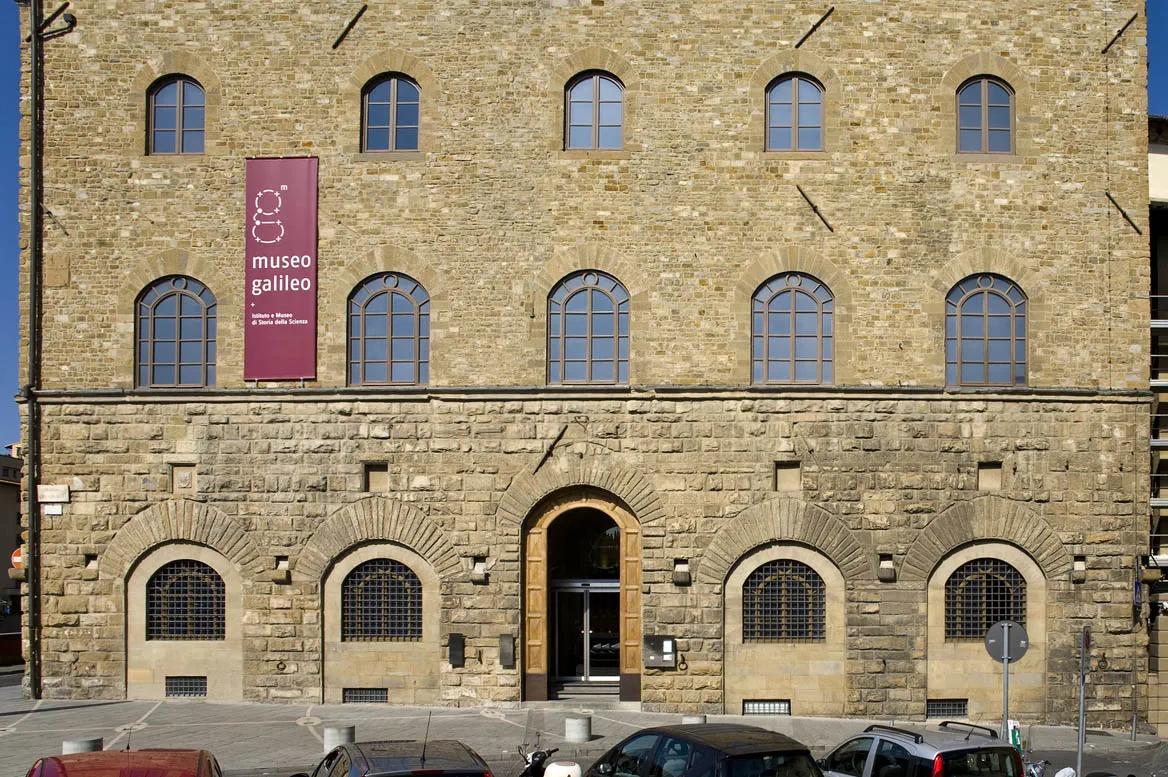
Palazzo Castellani, home of the Museo Galileo. Photo: Ebonaiuti · Wikimedia Commons · CC BY-SA 4.0
Quick answer: the Museo Galileo offers educational visits and activities that connect the history of science, mechanics and art. The 2026-27 programme includes proposals for different school stages, and all of them require booking. The key is to choose the activity according to the group's year and goal, not to add one more visit to the itinerary.
What can a pendulum tell us? And how do an artist's way of looking and a scientist's relate? On a school trip to Florence, the Museo Galileo opens another door to the city: observing, asking questions and understanding how knowledge has been built.
Which activity suits your group?
If you want to work on motion, Galileo e la meccanica uses the inclined plane and the pendulum to explain Galileo's research. The guide directs it at secondary school and plans 60 minutes in the educational area and 30 in the galleries.
If you are looking for a bridge between subjects, Leonardo arte e scienza connects vision and perspective through Leonardo's drawings and simple experiments. The guide marks it for all types of school: 60 minutes in the educational area and 30 in the galleries.
To combine the collection with experimentation, Visita con esperienze offers 60 minutes in the galleries and 30 in the educational area, with replicas available to participants. It does not involve handling the original instruments. It is also marked for all types of school.
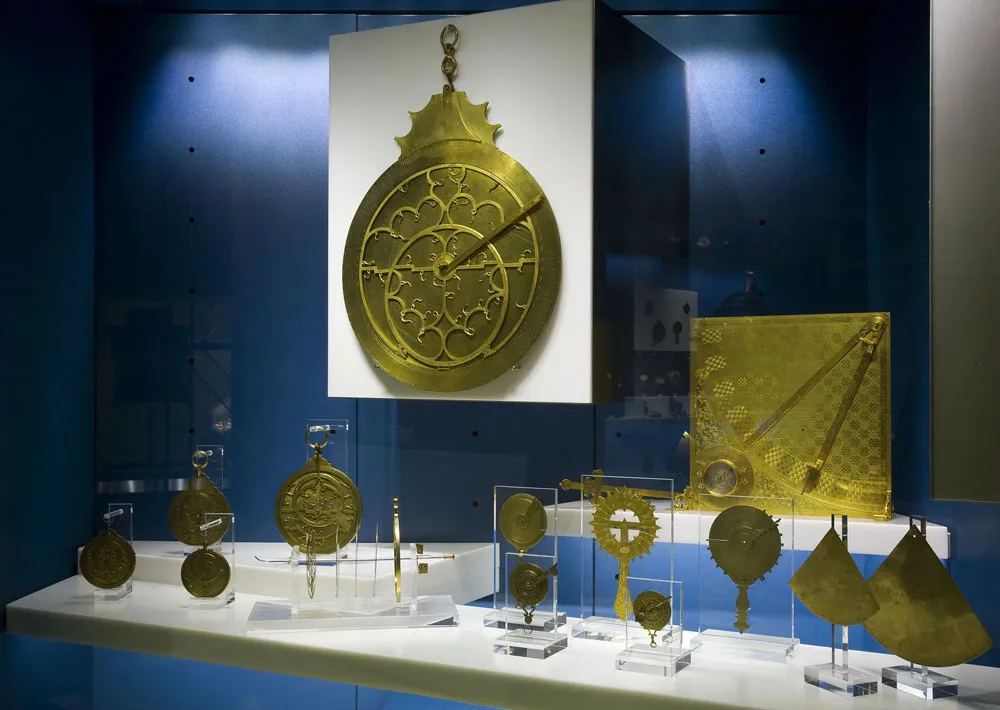
From question to visit: how to prepare in the classroom
Start with a simple question: what does this instrument allow us to measure? Each team can choose an object, identify its function and note what it would like to check. During the visit, one observation and one doubt can be more useful than a page full of names.
Afterwards, ask for a short explanation: what the instrument was for, what they have learned and what they still do not know. This is a working suggestion for the school, not an additional official activity of the museum.
What should you confirm before booking?
Suitability for the year group, the language, the group size and accessibility needs. Also ask for the total cost, including entrance, activity and booking, and confirm the available time slot. The three activities described last 90 minutes according to the 2026-27 guide; leave room to arrive and continue the route without rushing.
Frequently asked questions
Can the activity be done in Catalan or Spanish? Do not take it for granted. Confirm with the museum which language is available for the chosen format and date before closing the programme.
How long do the activities last? The three activities described last 90 minutes according to the 2026-27 guide.
Planning a school trip to Florence?
Tell Valua Travel the year group, the size of the group and what you want to work on. From there, we can look at how to give science a meaningful place in your itinerary. Write to us or send an email to hola@valuatravel.com.
Source: Museo Galileo, 2026-27 educational programme, printed pages 26-27, 30-31 and 42-43. Consulted on 18 November 2026.
Header photo: Palazzo Castellani, home of the Museo Galileo. Photo: Ebonaiuti · Wikimedia Commons · CC BY-SA 4.0 (uncropped). Not official museum material.