

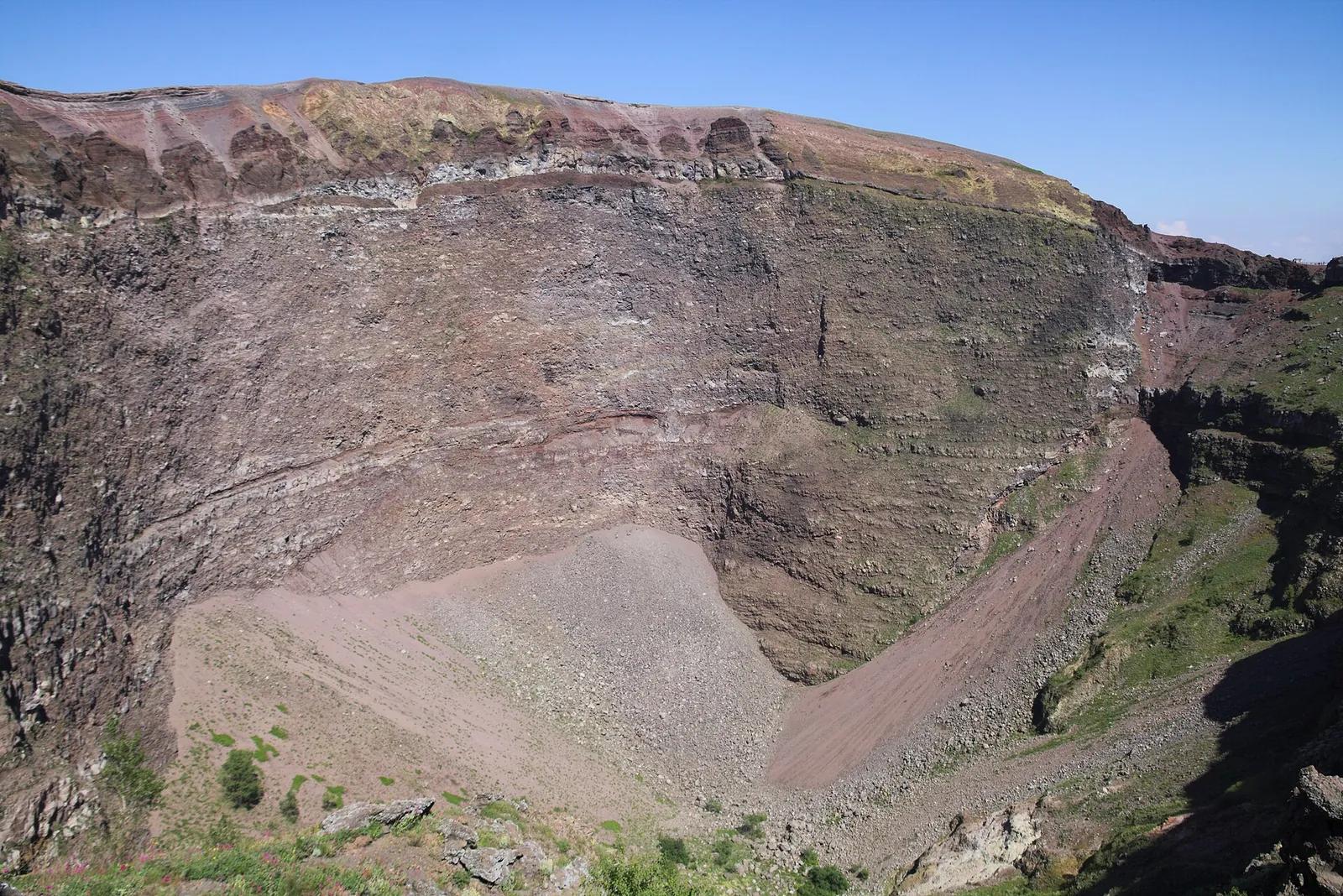
The crater of Vesuvius. Photo: Ingo Mehling · Wikimedia Commons · CC BY-SA 4.0
Quick summary: to visit Vesuvius National Park with a school group, the coach goes up to the 1,000 metre level, from where it is a walk of about 25-30 minutes to the rim of the Gran Cono (1,281 m above sea level). Warm clothing (even in spring), closed sports shoes and water are essential. The excursion is a practical volcanology lesson (fumaroles, lava strata and the Somma caldera) and is ideally combined on the same day with the visit to Pompeii.
Climbing to the crater of an active volcano on the European mainland is one of the activities students remember most from an end-of-year trip to Italy. To make the ascent of Vesuvius safe, comfortable and educationally worthwhile, at Valua Travel we have gathered the 5 essential tips every teacher and group coordinator should bear in mind before setting off.
Fact sheet: the ascent to the Gran Cono for schools
| Technical detail | Information for school groups |
|---|---|
| Maximum altitude (Gran Cono) | 1,281 metres above sea level. |
| Coach drop-off point | 1,000 metre level (Piazzale Quota 1000). |
| Height gain and walking time | ~280 m of ascent. 25-30 minutes up + 20 minutes down. |
| Physical difficulty | Low to medium (wide path of earth and volcanic ash, suitable for all students). |
| Ticket booking | Compulsory online with an exact time slot (there is no ticket office at the top). |
1. Weather and altitude: prepare the group for the cold at the Gran Cono
One of the most common mistakes on school trips to Naples (especially between March and June) is to rely on the good weather on the coast.
- At 1,281 metres the weather changes completely: even if it is hot and sunny in Naples or Pompeii, at the top of the Gran Cono the temperature drops by 8 °C to 12 °C compared with sea level, and the wind is usually strong.
- Advice for the group: tell the students the day before to pack a thick sweatshirt, a windbreaker or a light jacket in their rucksack.
2. Essential kit: suitable footwear, water and a rucksack
The path from the 1,000 m level to the crater runs over lapilli and loose volcanic ash, with some stretches of sustained slope.
- Closed shoes with a grippy sole: flip-flops, sandals and smooth-soled shoes are not allowed. Wear trainers or light walking boots to avoid slipping on the way down and to keep volcanic grit out of your shoes.
- Hydration: there are no drinking water fountains at the crater and prices at the kiosks at the 1,000 m level are high. Every student should carry a water bottle of at least 1 litre.
- Sun protection: at more than a thousand metres and with no trees for shade, solar radiation is high. Sunglasses, a cap and sun cream are strongly recommended.
3. Learn volcanology on site: what students should look out for
Vesuvius is an explosive stratovolcano (of the Plinian type) unique in the world, a real open-air laboratory for linking Natural Sciences, Geography and History. During the walk and the stop at the crater, invite students to observe four key features:
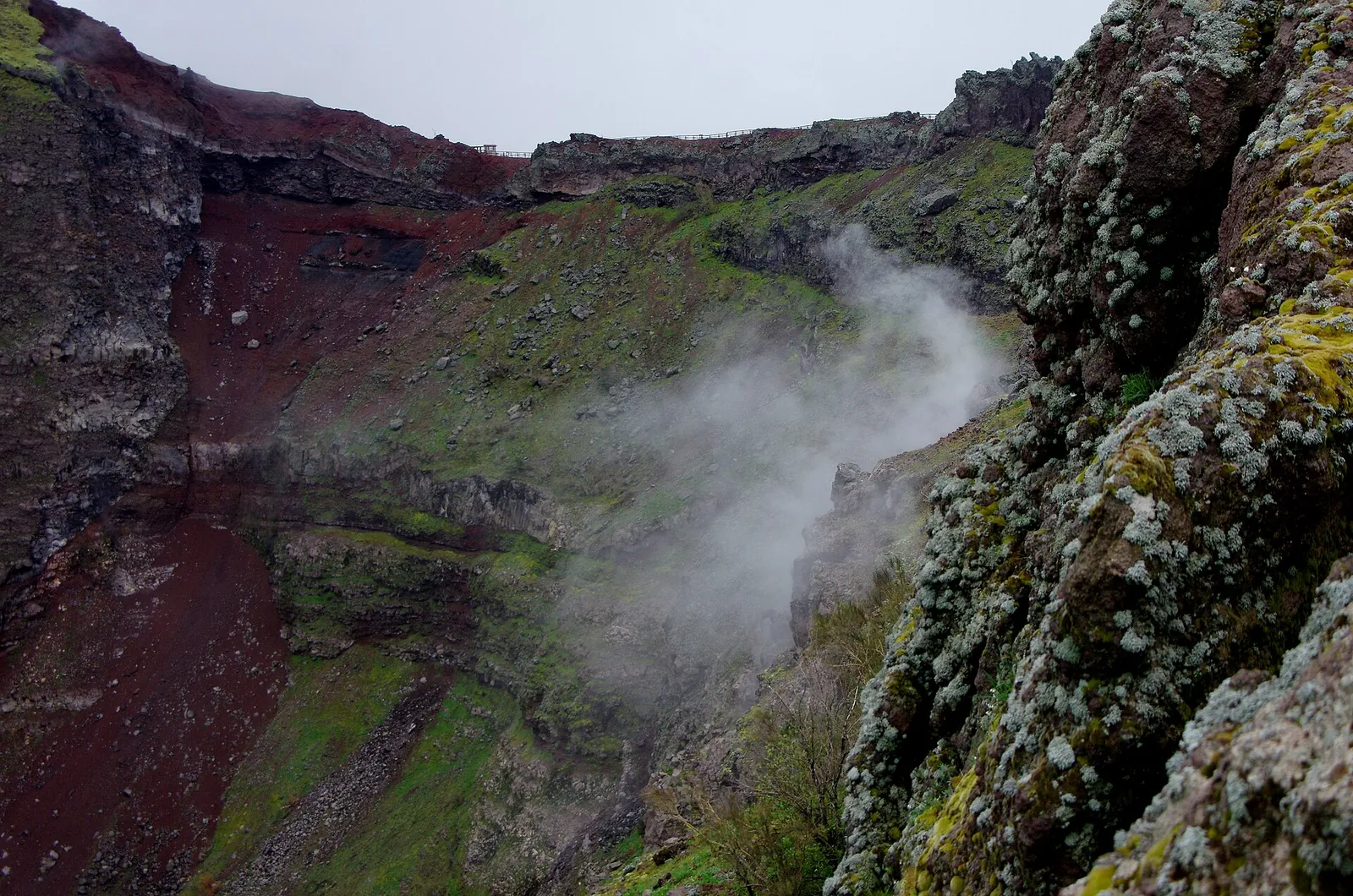
- The active fumaroles: along the inner walls of the crater you can see columns of water vapour and sulphurous gases at high temperature, which show that the volcano is active (in a dormant phase since the last eruption in 1944).
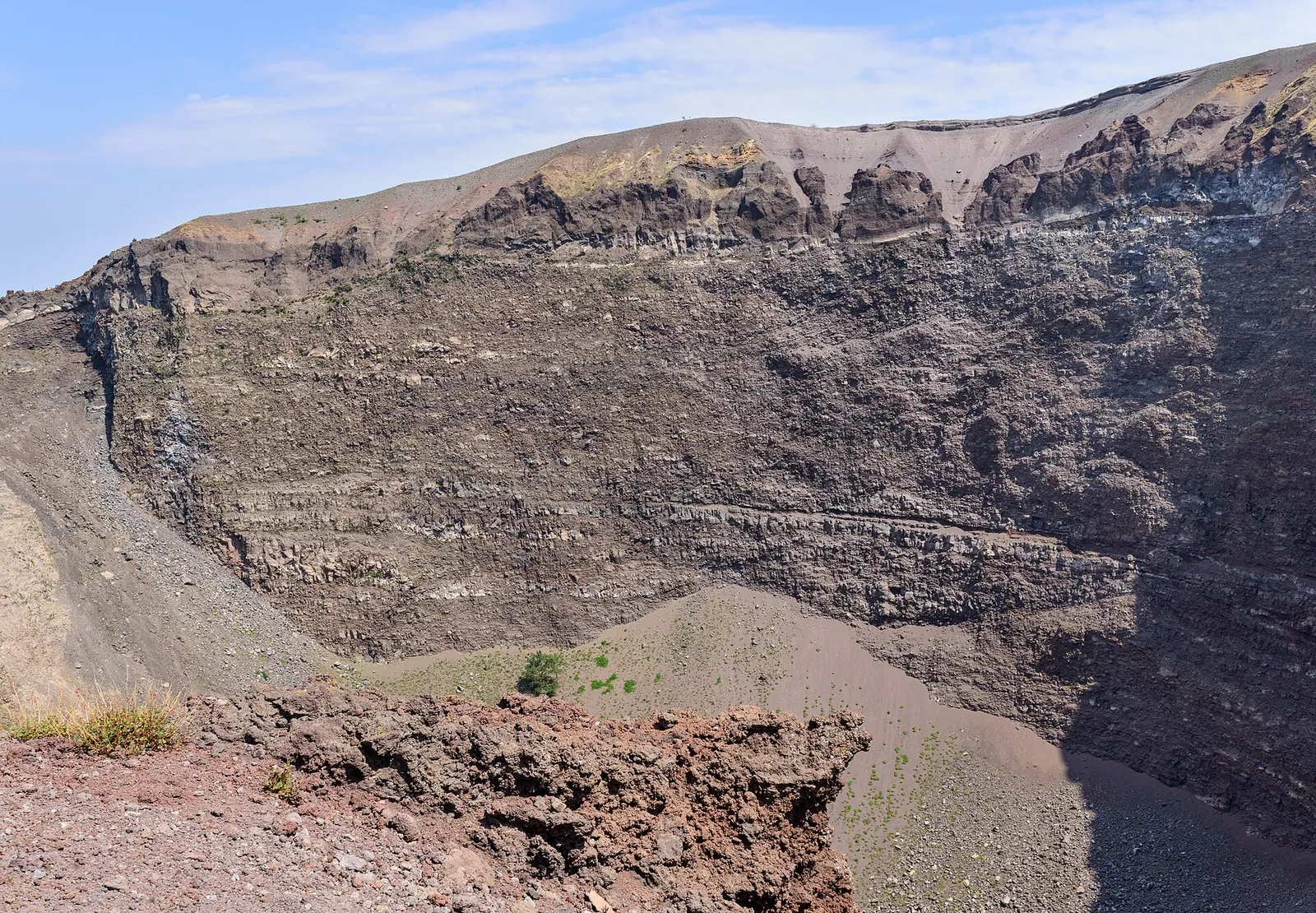
- The strata of lava and ash: the vertical walls of the crater expose superimposed geological layers of different colours (reddish from the oxidation of iron, black from basalt and grey from ash).
- The Somma-Vesuvius complex: looking north-east, you will see the semicircular ridge of Mount Somma, the old caldera of a much larger volcano inside which the present cone of Vesuvius was born.
- A bird's-eye view of the Bay of Naples: from the viewpoint you can clearly make out Naples, the Sorrento peninsula and the plain where Pompeii and Herculaneum stand, which helps students understand today's volcanic risk in one of the most densely populated areas of Europe.


4. The perfect pairing: combine Vesuvius with the visit to Pompeii
Visiting Vesuvius makes full educational sense when it is done on the same day as the archaeological visit to Pompeii.
- Two sides of the same story: at Vesuvius students understand the geological cause (the force of the eruption of AD 79), while at Pompeii they see its human and historical consequence.
- Route logistics: the two visits are only 35-40 minutes apart by coach. The most efficient plan is to climb Vesuvius first thing in the morning (when it is less hot and there are fewer clouds at the summit), have a picnic or restaurant lunch in the area and spend the afternoon walking through the Roman city.
- Prepare the second part of the day: see all the details on tickets, access via Piazza Anfiteatro and what to see in the article Visiting Pompeii with a school group.
5. Forget about paperwork and queues: Valua Travel organises everything for your group
Access to Vesuvius National Park has one critical feature: tickets have a strict time slot (with only a 40-minute entry window), they sell out weeks in advance in spring and no tickets are sold at the gate. In addition, the final stretch of road up to the 1,000 m level requires specific permits for tourist coaches.
At Valua Travel we take care of all the logistics so that the traveller does not have to deal with any paperwork:
- Guaranteed ticket booking with a coordinated time slot for Vesuvius.
- Private coach and permits to drive up to the 1,000 m level of the National Park.
- Volcanological and official guides specialising in groups.
- Full coordination of timetables, meals and accommodation adapted to each group's pace.
Frequently asked questions about the school excursion to Vesuvius
How long does it take to climb to the crater of Vesuvius with students? From the car park at the 1,000 metre level where the coach drops you off, the walk up to the rim of the Gran Cono takes between 25 and 30 minutes at a normal group pace. In total, counting the climb, the explanation at the crater and the descent, allow 1 hour and 45 minutes.
Do tickets for Vesuvius have to be bought in advance for a school? Yes, it is 100% compulsory. At the top of Vesuvius there is no stable mobile coverage and no on-site ticket office. All tickets must be bought online beforehand for a specific time.
What clothes are needed to climb Vesuvius in spring? Dress in layers (the "onion system"): a breathable T-shirt, a sweatshirt or fleece and a windproof jacket, since at 1,281 metres it feels much colder than in Naples or Pompeii, together with closed trainers.
How far does the coach go? Up to the 1,000 metre level (Piazzale Quota 1000). The final stretch of road requires specific permits for tourist coaches.
How difficult is the climb? Low to medium: it is a wide path of earth and volcanic ash, suitable for all students, with about 280 metres of ascent.
Is there water at the crater? There are no drinking water fountains and prices at the kiosks at the 1,000 m level are high. Every student should carry a water bottle of at least 1 litre.
Can it be done on the same day as Pompeii? Yes. The two visits are only 35-40 minutes apart by coach. The most efficient plan is to climb Vesuvius first thing in the morning and spend the afternoon walking through the Roman city.
Write to us or send an email to hola@valuatravel.com.
Header photo: the crater of Vesuvius. Photo: Ingo Mehling · Wikimedia Commons · CC BY-SA 4.0.
